

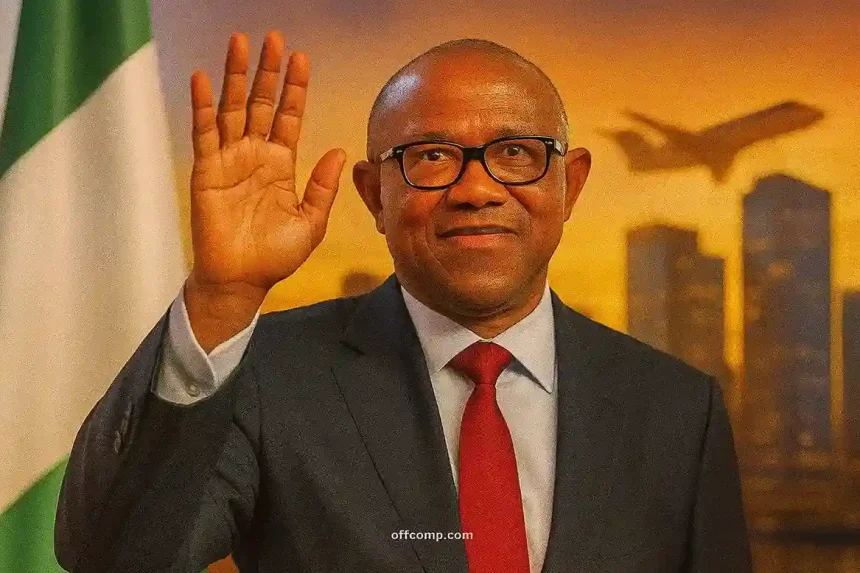
Peter Obi’s net worth has sparked more debate than almost any Nigerian politician in recent history, but for completely different reasons. While most politicians face questions about having too much money, Obi’s critics wondered if he had enough.
Peter Obi’s net worth is estimated between $10 million and $58 million, which translates to roughly ₦8 billion to ₦46 billion at current exchange rates. That might sound like a lot until you compare it to other Nigerian politicians. Then it looks downright modest.
- Who Is Peter Gregory Obi?
- Breaking Down Peter Obi’s Net Worth
- Peter Obi’s Modest Lifestyle: Why It Matters
- From Business to Politics: The Anambra Transformation
- The 2023 Presidential Campaign: How Modest Wealth Became an Asset
- Peter Obi vs Bola Tinubu: The Wealth Philosophy Divide
- Peter Obi vs Aliko Dangote: Business Philosophy Contrast
- Peter Obi vs Atiku Abubakar: From Running Mates to Rivals
- The Pandora Papers Controversy
- What Young Nigerians Can Learn from Peter Obi’s Wealth Journey
- Peter Obi’s Business Holdings and Investments
- The Future: What’s Next for Peter Obi?
- Frequently Asked Questions
- Final Thoughts
What makes Obi’s wealth story fascinating isn’t the amount but how he made it and, more importantly, how he spends it. This is a man who flies commercial when other politicians own private jets. A former governor who stayed in budget hotels instead of five-star suites.
Before diving into wealth-building strategies, understanding Peter Obi’s investment philosophy offers valuable lessons. His approach to profitable business opportunities shows that wealth doesn’t require flashy displays.
Who Is Peter Gregory Obi?
Born on July 19, 1961, in Onitsha, Anambra State, Peter Gregory Obi grew up in a middle-class family that valued education and business. His father was a successful trader, giving young Peter early exposure to commerce and entrepreneurship.
Obi attended Christ the King College in Onitsha before earning a philosophy degree from the University of Nigeria, Nsukka in 1984. He later obtained multiple business and management certificates from prestigious institutions including Harvard Business School, London School of Economics, and Columbia Business School.
Unlike most Nigerian politicians who started in government, Obi built his reputation in the private sector first. After graduation, he ventured into business and trading, importing and distributing various consumer goods across Nigeria.
His big break came in the banking sector. Obi became chairman of Fidelity Bank Plc at age 39, making him one of the youngest bank chairmen in Nigeria’s history. That position, held from 2001 to 2007, formed the foundation of his wealth.
In 2003, Obi entered politics as the All Progressives Grand Alliance gubernatorial candidate for Anambra State. After a lengthy legal battle, he was declared governor in 2006. He served two terms until 2014, transforming Anambra into one of Nigeria’s best-governed states.
Breaking Down Peter Obi’s Net Worth
Let’s be honest about something. Nobody knows Peter Obi’s exact net worth. Estimates range wildly from $10 million to $58 million depending on the source.
The lower estimate of $10 million comes from conservative calculations based on his declared assets and known business interests. The higher $58 million figure includes estimated values of his companies, real estate, and investments that aren’t publicly disclosed.
For this analysis, we’ll examine the sources of his wealth that can be verified.
Fidelity Bank Shares and Dividends
Obi’s chairmanship of Fidelity Bank from 2001 to 2007 wasn’t just a title. He owned significant shares in the bank, which he gradually divested when entering full-time politics as governor.
According to Wikipedia’s Peter Obi profile, his banking career provided the capital base for subsequent investments. Even after leaving the chairman position, Obi maintained some shares, earning dividends that contribute to his wealth.
Fidelity Bank is now one of Nigeria’s top 10 banks, with market capitalization running into hundreds of billions of naira. Obi’s early stake in the bank, acquired when it was much smaller, appreciated significantly over the years.
Next International Nigeria Limited
This is Obi’s primary business vehicle. Next International is an investment and management company with interests across multiple sectors.
Through Next International, Obi holds stakes in various franchises and distributorships. The company manages his business portfolio, including import licenses, product distribution rights, and corporate investments.
Franchise Investments
Obi invested heavily in international franchises operating in Nigeria. Reports indicate he held distribution rights for major consumer brands, though the specific brands aren’t always publicly disclosed.
These franchise operations generated steady income over decades, allowing Obi to accumulate wealth while maintaining relatively low public visibility compared to flashier businessmen.
Real Estate Holdings
Unlike politicians known for owning estates in every major Nigerian city, Obi’s real estate portfolio is surprisingly modest. He owns properties in Onitsha, Lagos, and Abuja, but nothing approaching the mansion collections of other political figures.
His primary residence in Onitsha is comfortable but not ostentatious. It’s the kind of house a successful businessman would own, not the sprawling compound typical of Nigerian political elite. Learning about profitable real estate approaches shows how modest investments can generate wealth.
Investment Portfolio
This is where estimates get tricky. Obi reportedly has investments in stocks, bonds, and other financial instruments, but the exact value isn’t public knowledge.
What we know is that as a former bank chairman and trained economist, Obi understands wealth management. His investment strategy appears conservative and diversified rather than speculative and concentrated.
Peter Obi’s Modest Lifestyle: Why It Matters
Here’s what made Peter Obi different during the 2023 presidential campaign. Every other major candidate was showing off wealth. Obi was showing off restraint.
When campaign videos showed him flying economy class on commercial flights, Nigerians couldn’t believe it. When he stayed in budget hotels during campaign tours instead of presidential suites, it became viral news.
His car collection doesn’t include armored G-Wagons or luxury convoys. Obi drives relatively modest vehicles, often seen in regular Toyota and Honda models rather than exotic imports.
This lifestyle wasn’t a campaign gimmick. People who knew Obi before politics confirm he’s always lived this way. Even as Anambra governor, he rejected the traditional mansion and security convoy that came with the office.
Why does this matter? Because it fundamentally changed how young Nigerians viewed political leadership. For the first time, a major presidential candidate was saying wealth should be used for development, not display.
From Business to Politics: The Anambra Transformation
Obi’s governorship of Anambra State from 2006 to 2014 tells you everything about his wealth philosophy. When he took office, Anambra was in debt. When he left, the state had N75 billion in savings.
Let that sink in. A Nigerian governor who left office with more money in the state treasury than when he arrived. That’s practically unheard of.
How He Did It
Obi’s approach was simple but revolutionary. Cut waste, increase revenue, invest in education and infrastructure.
He reduced government spending on non-essentials like exotic cars and overseas trips. The money saved went into building schools, healthcare facilities, and roads. For Nigerians seeking legitimate income streams, Obi’s prudent financial management offers inspiration.
Under his leadership, Anambra moved from being one of Nigeria’s least developed states to topping national education rankings. The state’s Internally Generated Revenue grew significantly without imposing crushing taxes on citizens.
The Legacy
When Obi left office in 2014, Anambra residents genuinely mourned. That doesn’t happen often in Nigerian politics, where citizens usually celebrate governors leaving.
His successor inherited a functioning state with money in the bank. That financial cushion and institutional foundation remain Anambra’s advantage today.
This track record became Obi’s strongest campaign asset in 2023. Nigerians had proof that his management style worked, not just campaign promises.
The 2023 Presidential Campaign: How Modest Wealth Became an Asset
In any other election, being the poorest candidate would be a liability. In 2023, it became Peter Obi’s superpower.
The “Obidient” movement didn’t emerge because of Obi’s wealth. It emerged despite his lack of it or rather, because of it.
The Contrast That Mattered
When young Nigerians compared candidates, the wealth disparity was stark. Bola Tinubu with his private jets and luxury mansions. Atiku Abubakar with his sprawling business empire and American University. Peter Obi flying economy class.
For a generation tired of politicians flaunting wealth while the country suffered, Obi represented something different. Not just a candidate but a rebuke to business-as-usual politics.
The Campaign Strategy
Obi didn’t try to match his rivals’ spending. He couldn’t. Instead, he turned constraint into strategy.
While other candidates paid for massive rallies, Obi’s supporters organized their own. While others bought media coverage, Obi went viral through organic social media support. While others distributed money, Obi distributed hope.
The campaign ran lean. No elaborate convoys. No stadium rallies with rented crowds. Just town halls, social media, and grassroots organizing.
The Result
Obi didn’t win the election, but he changed Nigerian politics forever. He proved you don’t need billions to be competitive. He showed that message and character could compete with money and machinery.
His third-place finish belied his impact. In southeastern states and among urban youth nationwide, Obi dominated. The Obidient movement didn’t die after the election. It evolved into a sustained civic engagement force.
Peter Obi vs Bola Tinubu: The Wealth Philosophy Divide
The 2023 presidential election wasn’t just a political contest. It was a clash of wealth philosophies that defined two very different visions for Nigeria.
Net Worth Reality Check:
Bola Tinubu’s net worth is estimated between $270 million and $8.4 billion depending on the source. Peter Obi’s sits at $10 million to $58 million. Even using the most generous estimate for Obi and the most conservative for Tinubu, Tinubu is at least five times wealthier.
How They Made Their Money:
Tinubu’s wealth is deeply intertwined with political power. His fortune grew exponentially during and after his time as Lagos governor, with business interests spanning real estate, media, and consulting firms tied to government contracts.
Obi made his money the old-fashioned way through banking and business. Before entering politics, he was already wealthy. Politics didn’t make him rich. It made him less rich, by his own admission, because he refused to use office for personal enrichment.
Lifestyle and Spending:
Here’s where the contrast becomes vivid. Tinubu owns a Bombardier private jet worth $60 million. Obi flies commercial economy. Tinubu’s car collection includes armored vehicles worth hundreds of millions. Obi drives modest sedans.
When Tinubu campaigns, luxury convoys stretch for blocks. When Obi campaigns, he often arrives with minimal security in regular vehicles.
Public Perception:
Nigerian voters saw two different futures in these men. Tinubu represented the status quo: wealthy politicians enriching themselves through power. Obi represented change: successful businessmen serving without self-enrichment. Those interested in building wealth ethically can learn from both approaches.
The Electoral Verdict:
Tinubu won the election with 8.8 million votes. Obi came third with 6.1 million votes. But the story doesn’t end there.
Obi won Lagos State, Tinubu’s political stronghold. That symbolic victory showed that even in the home of the “Jagaban,” voters preferred the modest alternative. The youth vote overwhelmingly favored Obi, suggesting a generational shift in political values.
What It Means:
The wealth gap between these two men represented more than personal fortunes. It symbolized two paths for Nigeria: continue with politicians who see office as wealth creation opportunity, or transition to leaders who see wealth as a tool for national development.
Peter Obi vs Aliko Dangote: Business Philosophy Contrast
On paper, Peter Obi and Aliko Dangote have much in common. Both are Igbo businessmen. Both built wealth before seeking influence. Both are respected for business acumen. But their approaches to wealth couldn’t be more different.
The Numbers:
Aliko Dangote’s net worth stands at approximately $23.9 billion, making him Africa’s richest person according to Forbes billionaire rankings. Peter Obi’s estimated $10 million to $58 million is a fraction of Dangote’s wealth. Dangote is roughly 400 times wealthier than Obi even using the highest Obi estimate.
Different Paths to Success:
Dangote built a business empire through aggressive expansion and scale. Starting with trading in 1977, he moved into manufacturing, creating the Dangote Group that dominates cement, sugar, salt, and now oil refining across Africa.
Obi took a different route. He focused on banking, investments, and franchises rather than manufacturing. His strategy prioritized steady returns over empire building, wealth accumulation over market dominance.
Public vs Private Wealth:
Dangote’s wealth is impossible to hide. His companies are massive, visible, and central to Nigeria’s economy. His cement trucks, sugar packages, and refineries are everywhere.
Obi’s wealth is subtle. His companies operate quietly. His investments don’t carry his name. You could live in Nigeria and not know Peter Obi is wealthy, which is exactly how he prefers it.
Philanthropy and Impact:
Both men are philanthropists, but with different approaches. Dangote’s foundation has pledged billions to healthcare, education, and poverty alleviation with large, visible projects.
Obi’s philanthropy is personal and often anonymous. He’s known for paying hospital bills for strangers, funding students’ education, and supporting churches and communities without publicity.
The Philosophy:
Dangote represents the belief that you should build wealth as large as possible, then use it to create jobs and development. Obi represents the belief that you should build enough wealth to be comfortable, then focus on using your skills for public service.
Neither approach is wrong. They’re just different answers to the question: What should successful people do with their success?
Peter Obi vs Atiku Abubakar: From Running Mates to Rivals
Few political relationships in Nigeria are as complex as Peter Obi and Atiku Abubakar’s. They were running mates in 2019, with Obi serving as vice presidential candidate on Atiku’s ticket. By 2023, they were competitors for the presidency.
Net Worth Comparison:
Atiku Abubakar’s net worth is estimated at $1.8 billion, built through logistics, education, agriculture, and strategic investments over four decades. Peter Obi’s $10 million to $58 million is significantly less, with Atiku being roughly 30 to 180 times wealthier depending on the estimate used.
Career Paths:
Atiku spent 20 years in the Nigeria Customs Service before co-founding INTELS, a logistics powerhouse that made him wealthy. He then entered politics, serving as vice president from 1999 to 2007 and running for president multiple times.
Obi went from business to banking to politics later in life. He became governor at 45, while Atiku was already vice president by that age. Exploring various paths to wealth shows how timing and strategy matter.
Business Style:
Atiku built large, visible businesses. American University of Nigeria (which he founded), INTELS shipping and logistics, massive farms, and real estate developments. His business empire employs thousands.
Obi’s businesses are smaller scale, focused on investments and management rather than large operations requiring huge workforces.
The 2019 Partnership:
When Atiku chose Obi as running mate in 2019, it seemed perfect. Atiku brought northern political strength and business credibility. Obi brought southeastern support and a reputation for competent governance.
They lost to Buhari and Osinbajo, but the campaign showcased both men’s strengths. Atiku’s experience and network. Obi’s integrity and management skills.
The 2023 Split:
By 2023, both men wanted to be president, not vice president. Obi left the PDP, Atiku’s party, to join Labour Party. They became direct competitors, splitting votes that might have gone to a unified opposition.
Current Coalition Efforts:
Interestingly, after the election, there’s talk of Obi and Atiku forming a coalition for future elections. Whether two men who were rivals can collaborate again remains to be seen.
What the Comparison Reveals:
The Atiku-Obi dynamic shows two approaches to Nigerian politics. Atiku represents establishment politics: build wealth, build structures, build alliances, then seek power. Obi represents insurgent politics: prove competence, build reputation, mobilize grassroots, then challenge the system.
Both have merits. Atiku’s approach has staying power and institutional backing. Obi’s approach has authenticity and popular appeal. Nigeria might need both.
The Pandora Papers Controversy
No examination of Peter Obi’s wealth is complete without addressing the Pandora Papers revelation that briefly dominated headlines.
What Happened
In 2021, the International Consortium of Investigative Journalists released the Pandora Papers, exposing how wealthy individuals worldwide used offshore accounts and shell companies.
Peter Obi’s name appeared in the documents, showing he had established offshore companies and accounts while serving as Anambra governor.
Obi’s Response
Obi didn’t deny the offshore accounts. Instead, he explained them.
According to his statement, the accounts were established for legitimate business purposes, properly declared, and fully legal. He maintained that using offshore structures for business isn’t inherently illegal or unethical if done transparently and for valid reasons.
The Debate
Critics argued that a governor preaching transparency shouldn’t have offshore accounts that could potentially shield assets from Nigerian tax authorities.
Supporters countered that successful businessmen routinely use offshore structures for international transactions and that Obi’s accounts predated his governorship and were for business, not political, purposes.
What It Reveals
The controversy actually reinforced something about Obi. Unlike many Nigerian politicians who vehemently deny any financial irregularities, Obi acknowledged his offshore accounts and explained them.
Whether you accept his explanation depends largely on your view of offshore banking generally. But the incident showed Obi was at least willing to address uncomfortable questions rather than hide from them.
What Young Nigerians Can Learn from Peter Obi’s Wealth Journey
Whether you supported his presidential bid or not, Peter Obi’s approach to wealth offers lessons for ambitious young people.
Build Before You Enter Politics
Obi established himself in business before politics. He didn’t need government to become wealthy. That financial independence gave him freedom to govern based on principles, not personal interest.
For young Nigerians, the lesson is clear. Build something first. Create value, generate income, achieve financial stability. Then, if you choose public service, you’ll serve from strength, not desperation.
Reputation Is Wealth
Obi’s greatest asset isn’t his bank account. It’s his reputation for integrity and competence. That reputation mobilized millions of young Nigerians who had never met him to campaign passionately on his behalf.
In the long run, reputation compounds like interest. Obi’s careful cultivation of his image as a prudent manager paid dividends when he needed public trust most. Professionals seeking legitimate online opportunities understand reputation’s value.
Modesty Is Strategic
In a country where flashy display is normalized, Obi’s modesty stood out. His willingness to fly economy, stay in budget hotels, and drive regular cars wasn’t just personal preference. It was strategic differentiation.
Young people building careers should ask themselves: Does displaying wealth help or hurt my goals? Sometimes, showing restraint builds more credibility than showing success.
Transparency Builds Trust
When the Pandora Papers hit, Obi could have denied everything. Instead, he acknowledged and explained. That transparency, even when uncomfortable, maintained trust with his supporters.
In business and life, mistakes and controversies will happen. How you handle them matters more than avoiding them entirely.
Have Multiple Income Streams
Obi’s wealth comes from banking, investments, franchises, and business management. Not one source. This diversification protected him when he entered politics and couldn’t actively manage businesses.
Young Nigerians should build portfolios, not just jobs. Create multiple income streams so you’re not dependent on any single source.
Peter Obi’s Business Holdings and Investments
Let’s examine the specific businesses and investments that form Peter Obi’s wealth portfolio.
Next International Nigeria Limited
This is Obi’s flagship company, serving as the holding structure for his various business interests. Next International handles import distribution, franchise management, and strategic investments across sectors.
The company isn’t publicly traded, so its exact valuation is unknown. However, as Obi’s primary business vehicle for decades, it’s likely worth tens of millions of dollars.
Former Fidelity Bank Position
While Obi no longer chairs Fidelity Bank, his tenure there from 2001 to 2007 was crucial to his wealth building. As chairman during a period of banking consolidation and growth, Obi positioned himself in one of Nigeria’s most lucrative sectors.
His shares in the bank, gradually divested as he focused on politics, provided substantial returns. Even residual shareholding would generate significant dividends given Fidelity’s performance.
Franchise and Distribution Rights
Multiple sources indicate Obi holds distribution rights for international brands operating in Nigeria. While specific brands aren’t always disclosed, these franchises typically cover consumer goods, technology products, and business services.
Franchise operations offer steady income with limited operational headaches since the parent company handles branding, product development, and marketing. The distributor focuses on logistics and local market execution.
Real Estate Investments
Obi’s real estate portfolio includes residential and commercial properties in Lagos, Abuja, and Anambra. Unlike politicians who own estates in every major city, Obi’s holdings appear focused on strategic locations with strong appreciation potential.
His primary residence in Onitsha is comfortable but not extravagant. Additional properties serve investment purposes rather than status symbols.
Stock Market and Financial Investments
As a former bank chairman with finance training, Obi likely maintains a sophisticated investment portfolio including stocks, bonds, and other financial instruments.
These investments would be managed conservatively given his public profile and the need to avoid conflicts of interest. Diversification across sectors and asset classes would be the expected strategy.
The Future: What’s Next for Peter Obi?
The 2023 election didn’t give Obi the presidency, but it positioned him as a major force in Nigerian politics. So what comes next?
Political Positioning
At 63, Obi is young enough for another presidential run. The 2027 election is already being discussed, and Obi remains the favorite of Nigeria’s youth demographic.
Whether he runs again depends on multiple factors: coalition possibilities with other opposition figures, the performance of the Tinubu administration, and the staying power of the Obidient movement.
Business Focus
Some speculate Obi might return to business full-time, leveraging his increased profile to expand his business interests. His name recognition now extends far beyond business circles, potentially opening doors previously closed.
Civil Society Role
Obi has been vocal on national issues since the election, commenting on policies, economic challenges, and governance. This suggests he sees a role for himself as elder statesman and conscience of the nation even outside office.
Coalition Building
There’s increasing talk of opposition coalition for 2027. Obi, Atiku, and other opposition figures uniting could create a formidable challenge to the ruling party. Whether egos and ambitions allow such cooperation remains to be seen.
Frequently Asked Questions
Peter Obi’s net worth is estimated between $10 million and $58 million, roughly ₦8 billion to ₦46 billion at current rates.
Obi built wealth as Fidelity Bank chairman, through Next International Nigeria Limited, franchise investments, and business management before entering politics.
No, Tinubu’s estimated wealth of $270 million to $8.4 billion is significantly higher than Obi’s $10 million to $58 million.
Obi owns Next International Nigeria Limited and held significant shares in Fidelity Bank during his chairmanship from 2001 to 2007.
Obi flies commercial economy class, stays in budget hotels, drives regular vehicles, and avoids the luxury displays typical of Nigerian politicians.
The Pandora Papers revealed Obi had offshore accounts while governor, which he acknowledged and explained as legitimate business structures properly declared.
Yes, Obi left Anambra State with N75 billion in savings after reducing waste and increasing revenue during his governorship.
Obi holds a philosophy degree from University of Nigeria, Nsukka and certificates from Harvard Business School, London School of Economics, and Columbia.
Final Thoughts
Peter Obi’s net worth story is fundamentally different from typical Nigerian political wealth narratives. He’s not the richest politician. He’s not even close. But his modest wealth became his greatest political asset because it represented something Nigerians desperately wanted: A leader who doesn’t need to loot.
His estimated $10 million to $58 million fortune places him comfortably among Nigeria’s wealthy, but nowhere near the political elite’s stratosphere. That gap isn’t a weakness. It’s his brand.
Whether Obi becomes president or not, he’s already changed Nigerian politics. He proved that message can compete with money, that character can challenge machinery, and that young Nigerians will mobilize for a candidate who represents their values.
For young people building wealth, Obi’s story offers a different blueprint. You don’t need billions to matter. You need competence, integrity, and strategic positioning. Build those, and opportunities will come.
The Obidient movement showed that millions of Nigerians are hungry for leaders who see wealth as a tool for service, not service as a tool for wealth. That’s Peter Obi’s legacy, regardless of what political offices he does or doesn’t hold.
In a country where politicians flaunt private jets and luxury estates, the man flying economy class captured the imagination of a generation. That’s not just a political story. It’s a wealth philosophy that challenges everything Nigerian politics has taught us to expect. For those seeking additional income strategies, Obi’s example shows wealth’s true purpose.